
Why inspection practice sets the real bar
Anyone operating in multiple European countries quickly notices that legislation rarely results in one uniform implementation. National authorities build their own systems, set additional requirements and apply their own inspection practices. Sometimes these additions are logical and arise from sector-specific risks, but for organisations it means one thing: you need to organise your documentation and data process in such a way that you can respond quickly per country, without ad-hoc workarounds.
The difference between “always being one step behind” and “staying in control” often comes down to one choice: are you still working with scattered documents, or do you have a stable digital foundation? e-CMR is a concrete building block that appears in almost every international road transport chain.
Spain: Documento de Control Administrativo (DCA)
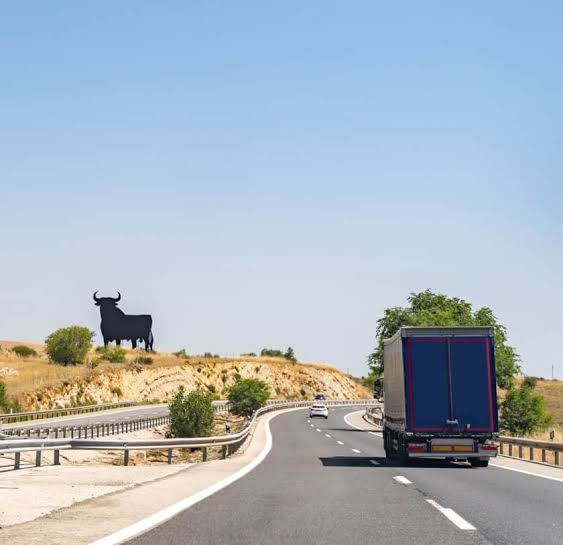
In Spain, the Documento electrónico de Control Administrativo (DeCA) plays a role in the further digitalisation of administrative controls in goods transport. The recent Spanish clarification makes clear that the mandatory electronic DeCA will apply from 5 October 2026 to domestic goods transport within Spain and cabotage transport within Spain.
For international road transport, the existing international transport documents, such as the CMR and e-CMR, will remain leading for the time being. This means that international transport to, from or through Spain does not automatically require a separate DeCA. Digital data exchange with inspection authorities is expected to increasingly take place via the European eFTI framework in the future.
The lesson for organisations is therefore not that every Spain-related transport immediately requires a separate DeCA document, but rather that transport data must be digitally, completely and verifiably available. This is especially relevant for parties active in Spain, carrying out cabotage operations, or preparing their processes for future eFTI developments.
e-CMR helps as a stable foundation: even if local documents or additional data layers are required, you want the core of your transport information — shipment, parties, locations, status and POD — to remain centralised and traceable. Would you like to know more about what DCA / DeCA exactly is? View this page: https://collectgo.eu/en/what-is-the-documento-de-control-administrativo-dca/
Belgium (Flanders): OVAM and the digital identification form
In Belgium, particularly in Flanders, waste transport is strongly regulated through OVAM, where digital identification forms and tracking requirements call for local integrations. This shows that some domains move towards national systems faster than towards European uniformity.
The lesson: set up e-CMR and your data foundation properly first, so that connections to local systems become less “manual work” and more a “translation of the same source data”.
The Netherlands: LMA and consignment notes
The Netherlands is further ahead with LMA and digital accompanying documents, but that maturity also makes inspections stricter on data consistency and completeness. A digital process only works if data is unambiguous throughout the chain.
An e-CMR process with proper validations and logging helps you demonstrate that data consistency, especially when multiple systems, such as TMS, customer portals, e-CMR and national registrations, are involved.
Romania: RO e‑Transport (real-time checks and UIT code)
Romania shows how far national regimes can go. With RO e-Transport, the approach is based on real-time control: advance registration, generating a UIT code, tracking and detailed information.
This is exactly why “documents” are no longer enough. You need to capture data early and accurately. e-CMR is not the solution for every national system, but it is the way to organise your core transport data properly, so you can comply more quickly with additional national data layers.
Greece: myDATA and linking transport data with fiscal data
Greece links logistics movements to fiscal reporting through myDATA. This creates an additional layer: transport information also touches financial evidence.
Here too, e-CMR reduces discussion because the core evidence, such as the consignment note, status and signature, is digital and traceable. This indirectly helps make the rest of the chain, including financial reporting, more consistent.
Need a quick overview of laws and regulations in Europe?
Download the Collect + Go whitepaper and receive the complete overview of laws and regulations.
Download the whitepaper
Fill out the form and you’ll get instant access to the whitepaper.